Complete overhaul and redesign
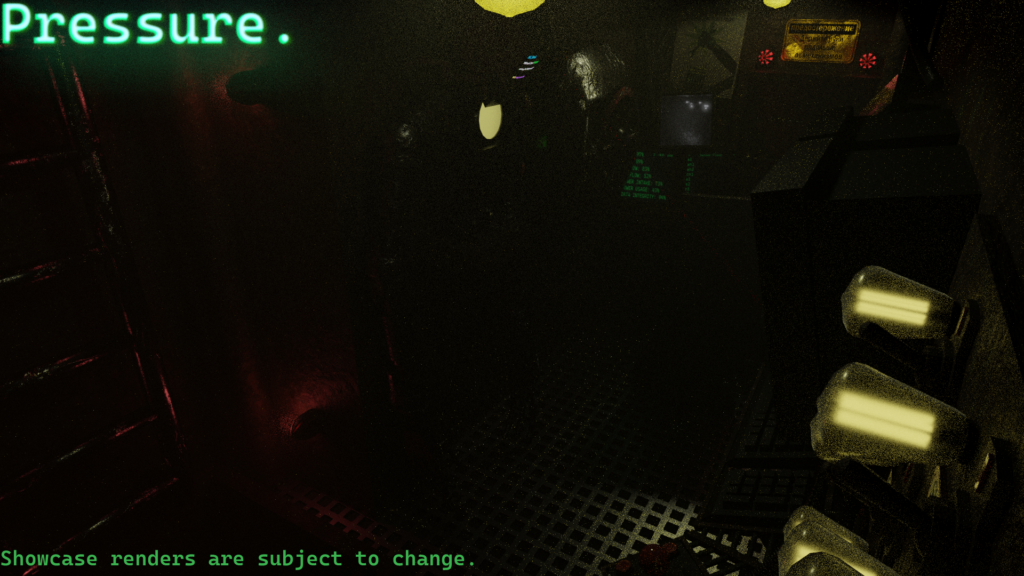
Pressure this year has taken an incredibly drastic turn in almost every direction. What originally started as a sit-and-survive FNaF inspired horror game has turned into a stealth survival thriller action game set in a near-future setting.
Synopsis – Story & Gameplay
Gameplay
Pressure is set aboard the Philosopher, a completely autonomous nuclear submarine controlled by a central AI core. Genre wise, Pressure is a mix of stealth-action and survival horror. Think Metal Gear Solid mixed with Resident Evil or Silent Hill. Heavily inspired by the PlayStation 2 era of gaming, the graphics are intentionally retro and so are the gameplay elements. Not many games are 3rd person anymore, which used to be a stable for console games. While I haven’t landed on a rock solid control scheme, the general camera references I have in mind are Resident Evil styled fixed camera positions for long hallways and rooms, with a dedicated view-mode for weapons inspired by the way Metal Gear Solid V handles its weapons.
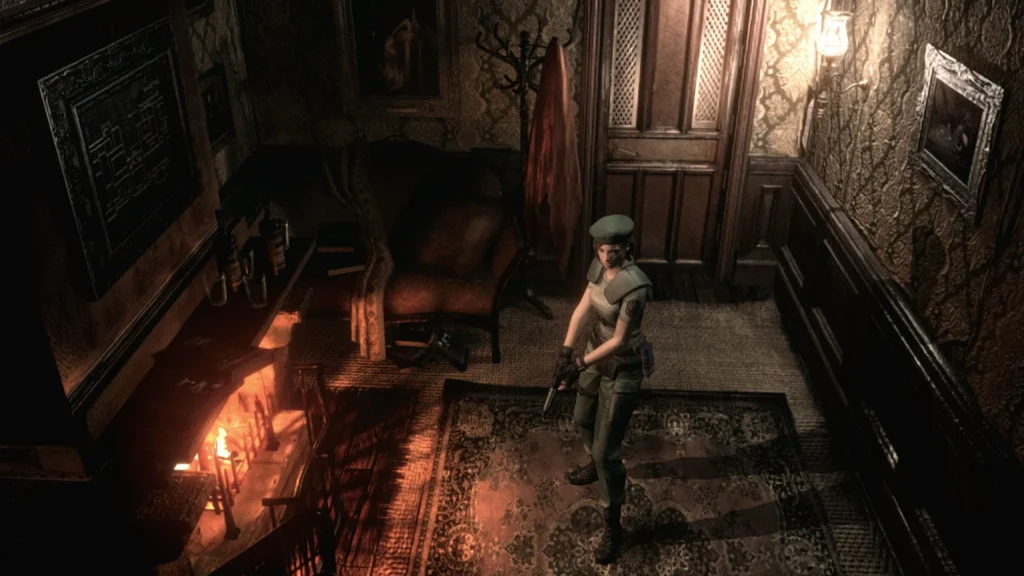
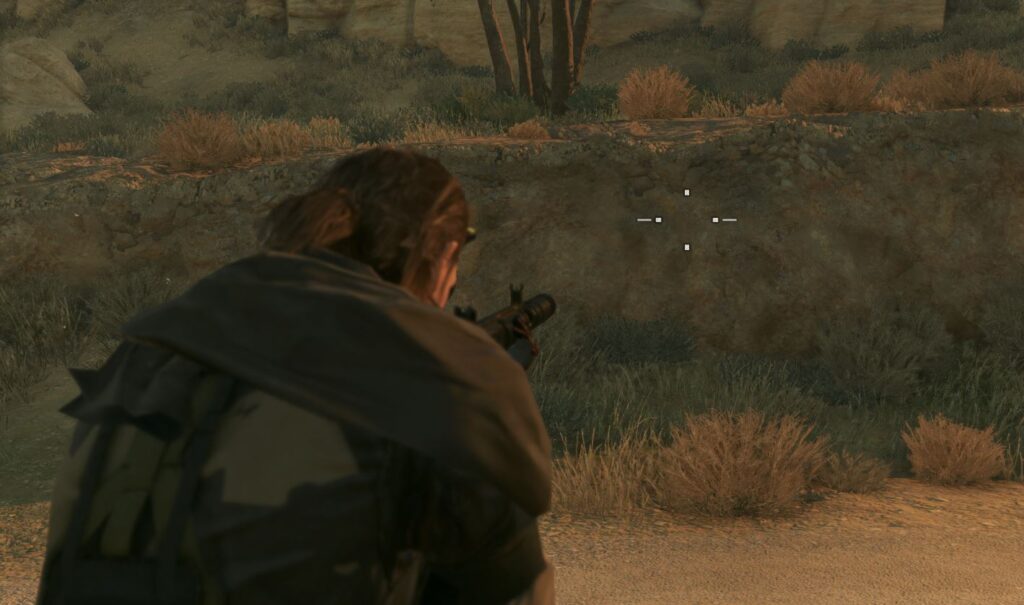
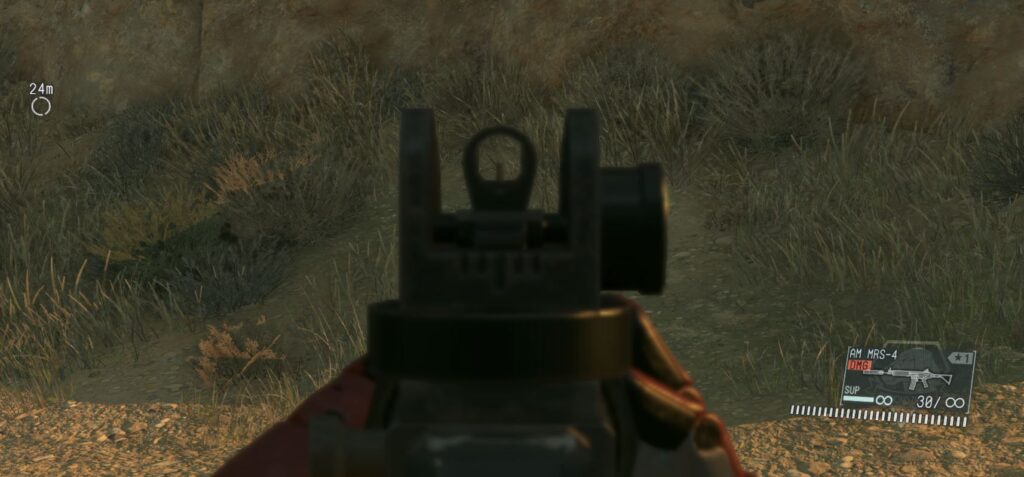
The stealth element of the game comes from evading enemies, be it robot patrols or enemy scavengers looking for something to steal, making as little sound as possible comes in handy on a dead-silent submarine. Weapons are present however, making stealth optional.
Story
The year is 2056, conflict covers the African continent. While the Soviets succeeded in creating the worlds first autonomous fighting machines, it did little to save their economy after the mess that was Afghanistan in the 1980’s. Ever since then drone warfare has become the norm, with humanoid drones accompanying the grunts of most world armies. This new war economy is fuelled at its heart by advanced electronics, which in turn hinge on reliable sources of precious metals & resources. Unluckily for the residents of Africa, the continent has a wealth of these desperately sought after resources.
Private military contractors rule the savannahs with iron fists, operating either out of pure greed or as pawns for world governments looking to secure mines. The protagonist of Pressure just so happens to come from one of these PMCs, working as a gun for hire willing to shoot for the highest bidder. That is until they receive a call from an old friend, asking for a personal favour out at sea. Kraken Holdings LLC is the name of one of the biggest anti-piracy PMCs operating off of the coast of the Congo, and are the protagonists new employers. Normally you don’t need boots-on-the-ground grunts in the navy, however this is no ordinary job.
While doing ocean-floor photography, one of Kraken’s vessels captured photos of a large, dark object floating silently past their sensors, marked by the Russian word “Философ” (Philosopher) in big white lettering. Among both pirates and anti-pirates, the legend of the Philosopher is known better than the bible out at sea. Rumoured to be a ship lost at sea on its maiden voyage packed to the brim with experimental technologies and extremely advanced AI systems, its coveted by all sea-dwellers. Staging a boarding operation, Kraken need soldiers with combat experience present to take control of the submarine just in case things go wrong.
Things go very, very wrong very quickly however, with the ghost-ship’s AI waking up along with an army’s worth of robot soldiers and crewmen. And just to make matters worse for the salvage team, an incredibly well funded rival PMC also caught wind of the submarine, and launch their own hostile take over…
Developing the Theme
Pressure has always been heavily atmospheric. While the original plan was for the game to be a gritty, claustrophobic stress test with the player stuck in a tight room surrounded at all sides by open doors and vents that constantly build tension and paranoia, the vision has changed quite a lot.
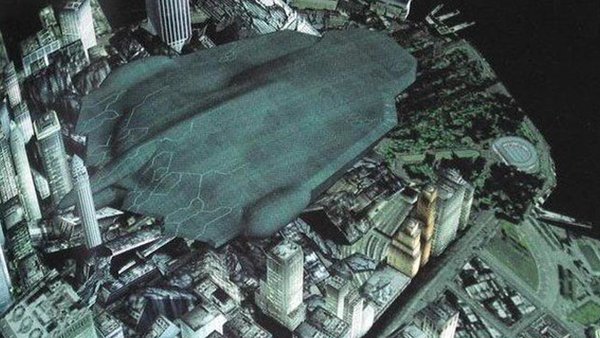
It is well known to anyone that knows me that the Metal Gear game franchise is one of my biggest influences for just about everything, and the setting for Pressure is no different. Both the theme and story are heavily influenced by the end of Metal Gear Solid 2: Sons of Liberty, particularly the parts taking place aboard the Arsenal Gear. The cold blue-green hues and large, metallic rooms and areas have given me quite a lot of inspiration.
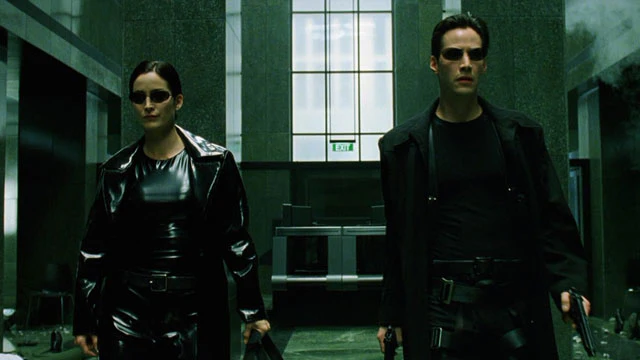
The colour scheme of late 90’s to early 2000’s movies has also been a big visual influence, with movies like The Matrix being one of the most iconic pieces of media to have such colour grading. Media from the late 90’s has been a massive influence in general for Pressure, be it story, gameplay or visual themes.
The idea of a massive submersible military vessel also carries over into Pressure, with the Philosopher itself being a gigantic Russian submarine built to run completely autonomously or as a super-battle-station. The idea of something so massive moving in complete silence and utter darkness is incredibly eerie to me, and there’s just something about the way the Arsenal Gear is portrayed that really tickles that itch for me. While I haven’t put much thought into the actual exterior design of the Philosopher and I don’t plan on giving it a ray-shaped body, the sleekness of rays does give inspiration. Perhaps once I’ve landed on a solid interior design I’ll experiment with different hull shapes.
Visual design isn’t everything though when it comes to atmosphere, sound plays a very large part too. My best friend Henry is a musician and I asked for his help to create some ambient tracks for the game. While I only have to show for now, the plan is to make short, overlayible tracks for certain actions or events in the game, such as being spotted by a robot, getting in a firefight, etc.
Developing the Story
The story for Pressure is something completely brand new compared to the old plan for the game. The old story was extremely all over the place and barebones. The most I can remember is that the submarine was Russian and that the player was using the robotic Servicemen to maintain the crusty old submarine.
As mentioned in the design section, the Metal Gear franchise is my biggest inspiration ever. The story heavily draws from elements present in the entire game series. Although some story elements are inspired, the entire game and story are completely original. Elements like an AI powered submarine, a secret plot hidden underneath the already present drama, and an eerie, oddly organic submarine were all inspired by MGS2, with elements of MGSV such as private forces in Africa also heavily inspiring the tone of the game. The game itself is a love-letter to the whole era of games created in the late 1990’s, especially the Metal Gear franchise.
Developing the main character has been an especially interesting challenge for me. Originally I was going to play off of the idea that the protagonist is some poor, unprepared soul thrust into the middle of a less than ideal situation, however I struggled with making the character interesting or likeable. Instead now I’ve come up with a much better protagonist with much more depth. I wont go into much detail as I’m still ironing things out, and would prefer to wait until I have concept art to show to go into the specifics of the character. Their background is rough and complicated, coming from a family of military service and leaving at a young age to become a soldier of fortune during the African crisis, with their mentor being the captain of the Philosopher expedition.
The backstory of the Philosopher is something I hammered out in a way I’m very much happy with. The Philosopher itself is a Russian ghost-submarine, designed with the purpose of functioning completely autonomously without any crew. It’s AI is so developed the entirety of the submarine is controlled by one entity, with the robot enemies being apart of its hive-mind. The story of it disappearing starts in Ukraine. In this technologically advanced alternate history, Ukraine and Russia are locked in an all-out cyberwar. Unfortunately for the Philosopher, the worst cyber-terror attack in human history just so happened to occur on it’s maiden voyage. The attack completely knocked out the entirety of Russia for a whole 3 days, with the Philosopher losing all outside contact. Choosing to not expose itself to potentially be attacked next, the AI of the Philosopher would slip silently into the murky waters of the Pacific Ocean, hopefully never to be seen again… thus, the pirate legend of the ghost-sub was born!
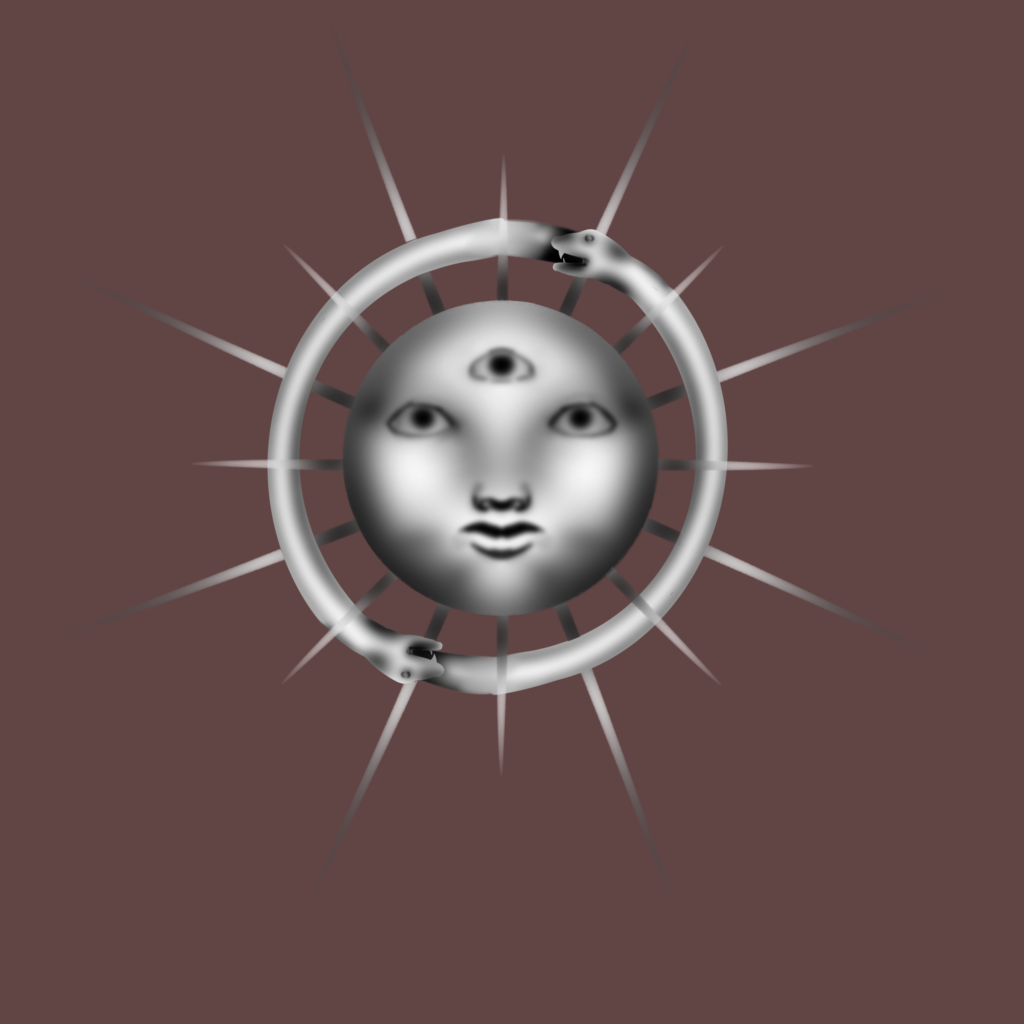
The next, more personally interesting story element I developed was the Légion du Soleil, or “Legion of the Sun”. Pressure is set within my own extended universe, and without getting into crazy detail, Légion du Soleil know a lot more than they let on about the advanced AI core aboard the Philosopher, potentially more than anyone. The Legion is intentionally meant to be mysterious, having cutting-edge technology and extreme training, they’re a force of nature unknown to the public eye yet connected to almost everything happening within Africa. Their leader is a man who goes unnamed, his only speaking lines being a parody of Revolver Ocelot’s end-credit speeches from non-other than Metal Gear Solid! Tying in the Legion and their convoluted story to Pressure was really fun, and their inclusion fits in nicely within the story of the game.
Developing the Gameplay
Gameplay mechanics for Pressure and I go waaaaay back. Pressure was only created because I had a cool idea for FNaF fan game mechanics anyway, so its only natural that I went a little overboard with the mechanics at first. The mechanics are completely and utterly different from the first iterations of Pressure seeing as the new Pressure is an action game instead of a FNaF clone. The first and foremost gameplay elements I focussed on were, of course, the robots.
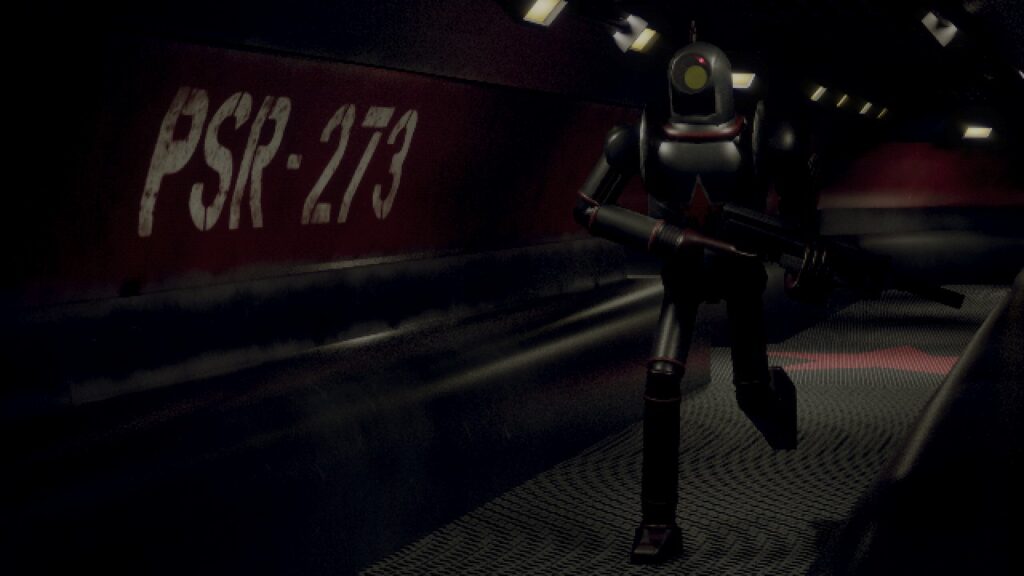
compared to my previous robot designs, the new enemies for Pressure are LEAGUES different. I’ve always wanted to create really detailed robot endoskeletons with shells they use for protection, that’s what some of my earliest Blender projects were when I first started. However, I did a complete 180 for the new Pressure, finally breaking the infinite feedback loop I was previously stuck in. The new robots are just two simple, low-poly enemies each with very specific purposes.
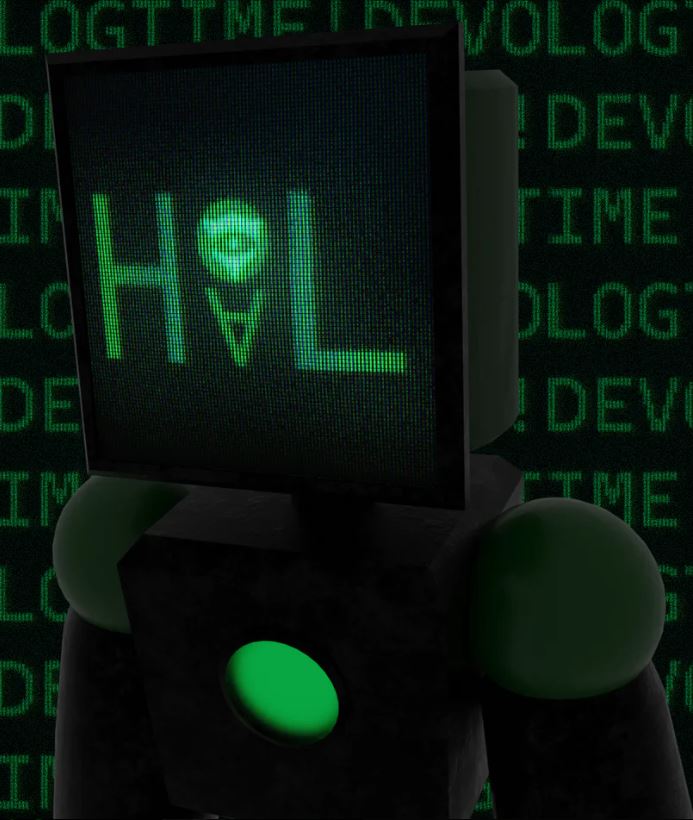
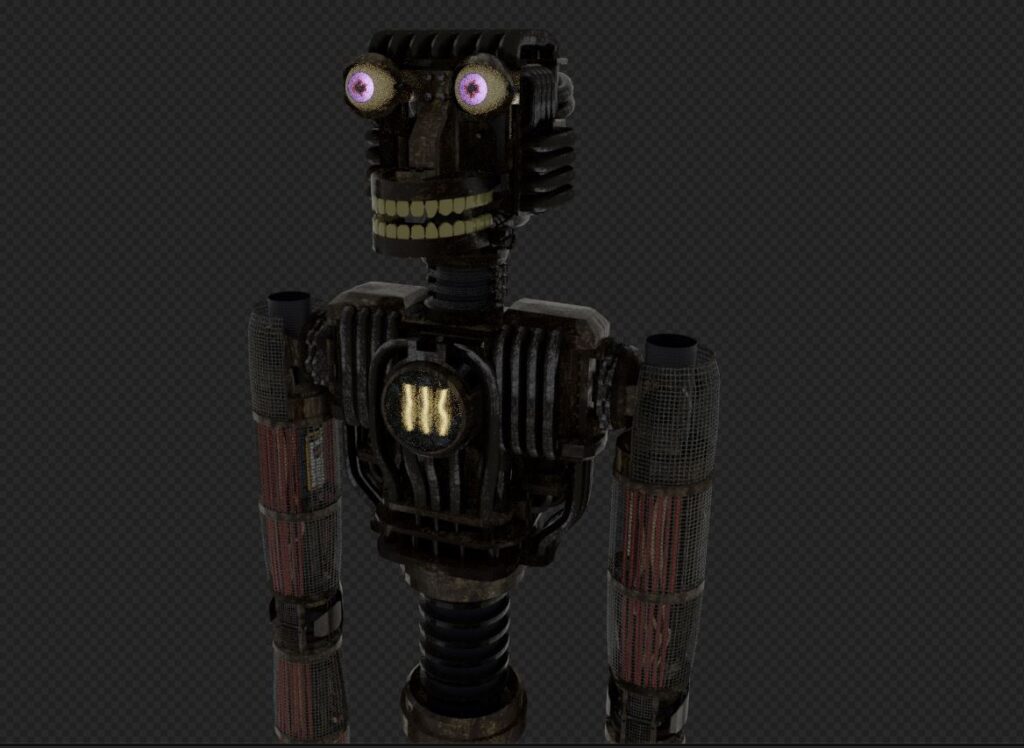
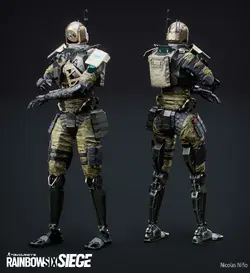
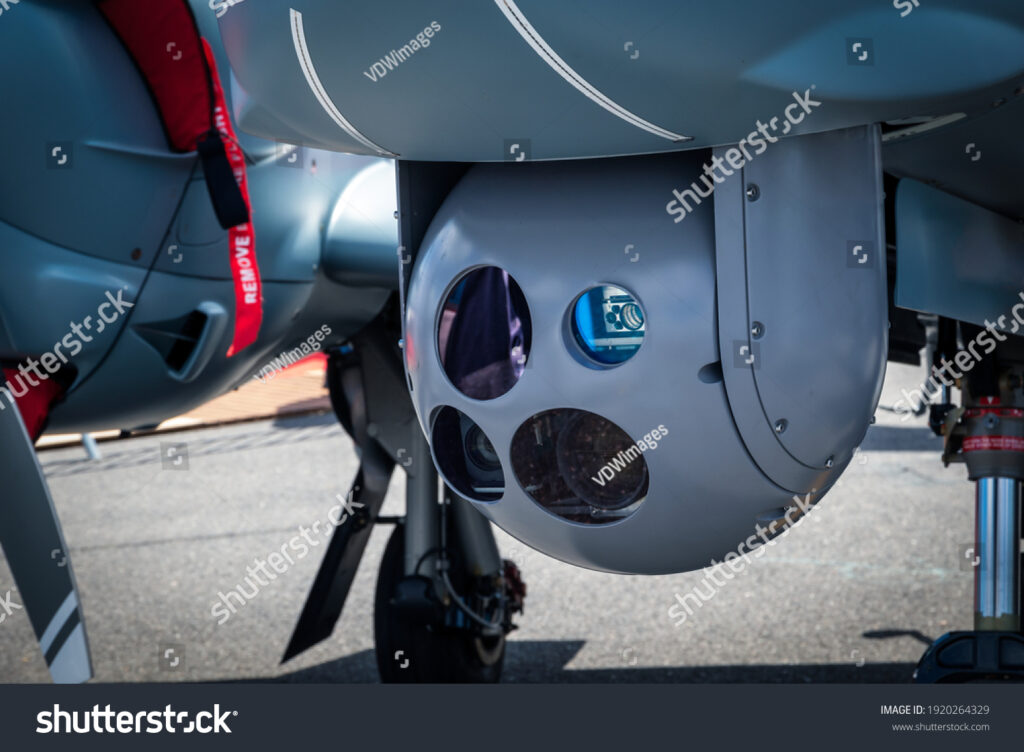
Creating the new robots an extremely fun process. I first started with Igor, the combat robot since I had the most ideas for where to go with him. Being fresh off my hyper-mechanical endo-skeleton bender, I decided I needed to just make something simple and that looked good. The first things that gave me inspiration and ideas for the new models where two main things, gimbal cameras for aircraft and the operator Skopos in the video game Tom Clancy’s Rainbow Six: Siege. Skopos has two robots that she controls, and the design of them always really appealed to me, especially their head designs.
I always had the vision that the Igor model would be a military unit, and I experimented with designs a little during the early stages of design. Originally Igor was going to be green! However, it always felt off to me having a big, army green robot on a navy vessel, so I eventually colour swapped him.
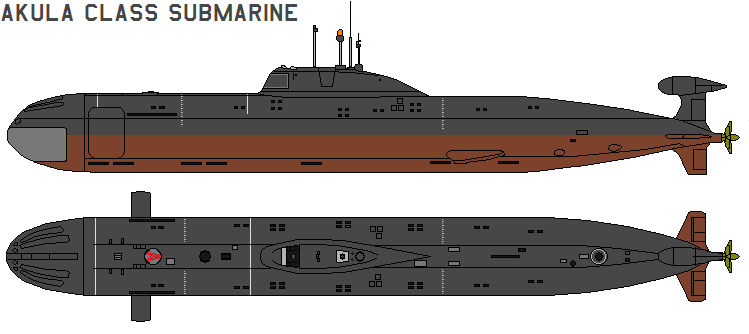
I experimented with a camouflaged look before I realised why I couldn’t get it to look right, because an army robot does not belong on a submarine! After that shocking realisation I came up with a far more iconic and fitting colour scheme inspired by submarines themselves.
I always had one really solid idea for Igor’s design though, which includes him getting progressively damaged and revealing his weak-points. In-game, the Igor units are extremely well armoured and can only be defeated by exposing then destroying the weak-points in his arms, legs and torso. The idea is that the Igors are meant to be nigh un-killable and punish the player for going toe-to-toe with them by being massive bullet sponges.
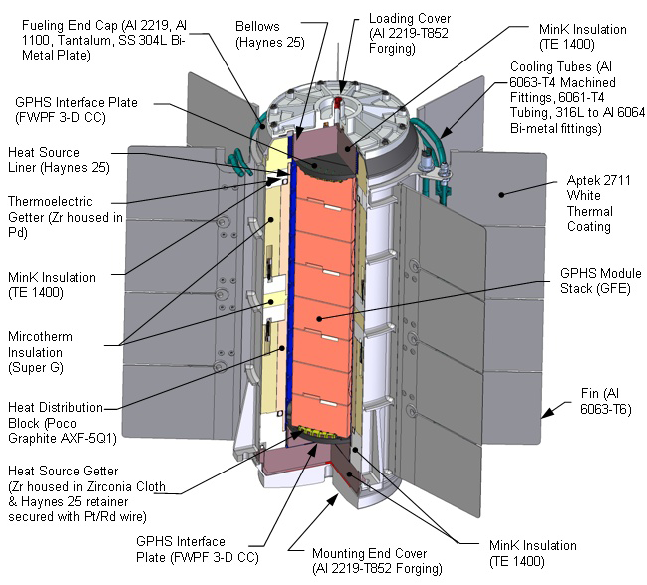
Another gameplay idea I had was that the damaged Igors would roam around the submarine, still hunting down the player after being awoken for the first time. The Igors are made up of fleshy-looking white tendons that control their limbs, with the big white hunk of metal in their chests being an RTG battery. A radioisotope thermoelectric generator is, in layman’s terms, a big nuclear battery that generates heat. What a perfect thing to use to power big robots!
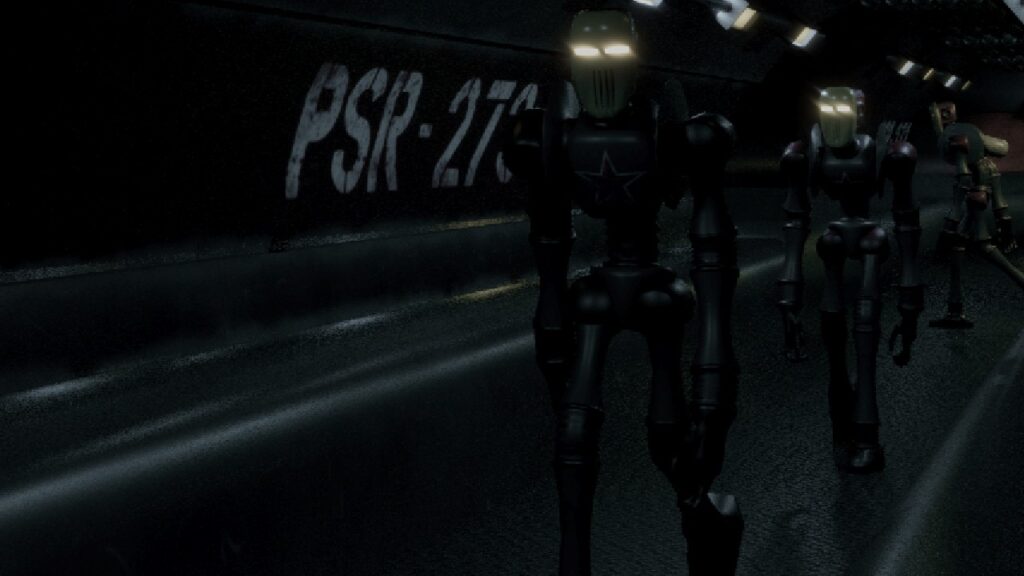
Speaking of Ivan, Ivan is the smaller, much more nimble cousin of the great Igor. Ivan units are the logistical crutch of the entire Russian Auto-Fleet, with Ivan’s being capable of doing anything I human can do. Because of this, they make for the perfect crew for the autonomous Philosopher submarine.
Design wise I intentionally designed both of the robots to have a lot of differences. Obviously the general design is very similar, with them both having the disc-like shoulder joints and rubber hands and feet. I wanted the Ivan units to be intentionally gangly and stereotypically “creepy” with long limbs and a weird, creepy face. The idea behind this choice to make the Ivans creepy while keeping the Igor unit a big robot was that in game the player would get accustomed to the Ivan units and their design, making them less creepy over time. To bring fear and intimidation back into the game, the Igors would just be lumbering giants who move by tilting their entire bodies forwards, quite literally barrelling towards the player. On top of that, the Igor units can use guns!
Developing the Gameplay – Guns
Being a shooter game, guns are intrinsic to the gameplay. And being a fan of firearms myself, it was a no brainer to include the coolest guns I could think of in the game. So far only three guns have been actually made, but I already have ideas for a shotgun weapon and potentially more weapons too. Since my influences were all mainly from the 90’s, choosing guns that would both be appropriate for a more advanced future while still being iconic images of the 90’s was a little bit tricky, but the first no-brainer was, of course, the iconic Desert Eagle.
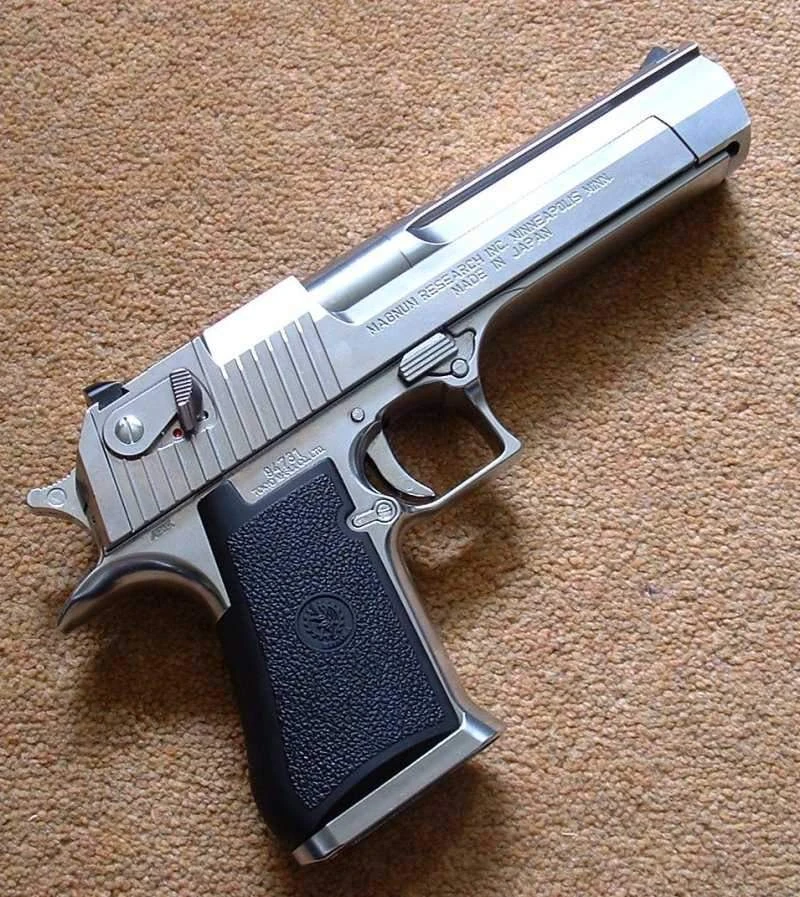
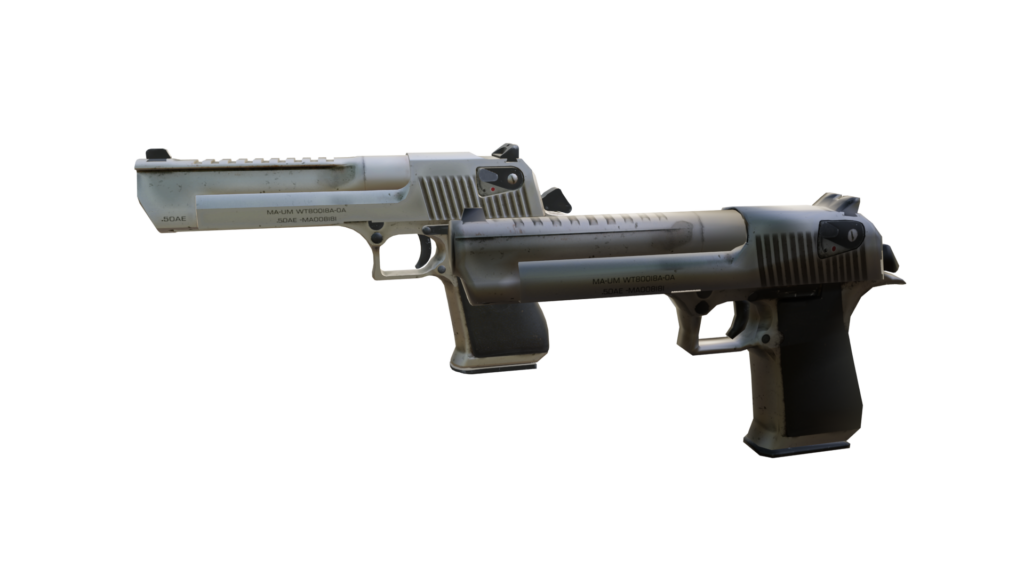
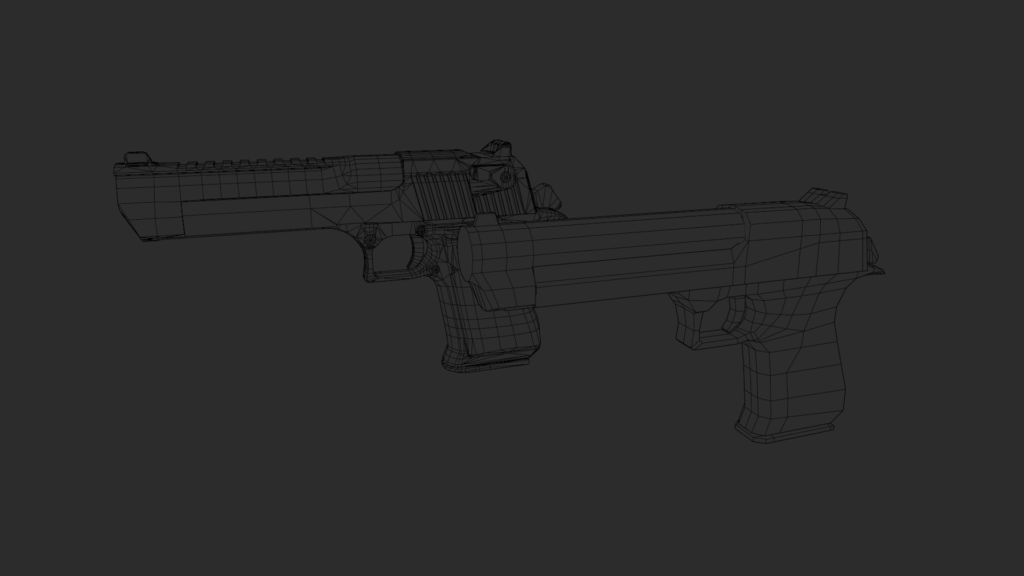
The Deagle wasn’t the first gun I made, but it was the first pistol I made. I intentionally want everything in Pressure to be simplistic, as this will make everything a lot easier in the future when developers are eventually found. Modelling wise, the process was simple. I downloaded a Desert Eagle model from online, then blocked it out so it looked low-poly. Texturing was more of the same, using the base model and rendering it from different angle to then project them onto the new low-poly gun. And then bam, a gun was born.
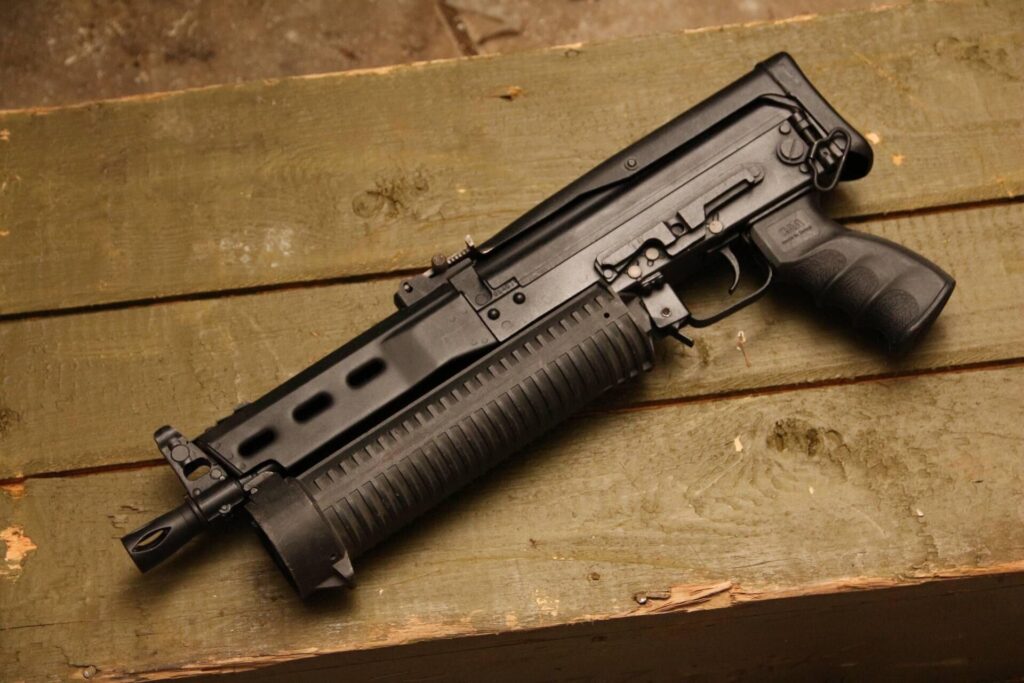
The first gun I made was very different to a pistol, being a sub-machine gun. I always knew this gun had to be in the game, as its unique design and operational niche just fit perfectly into the setting of Pressure.
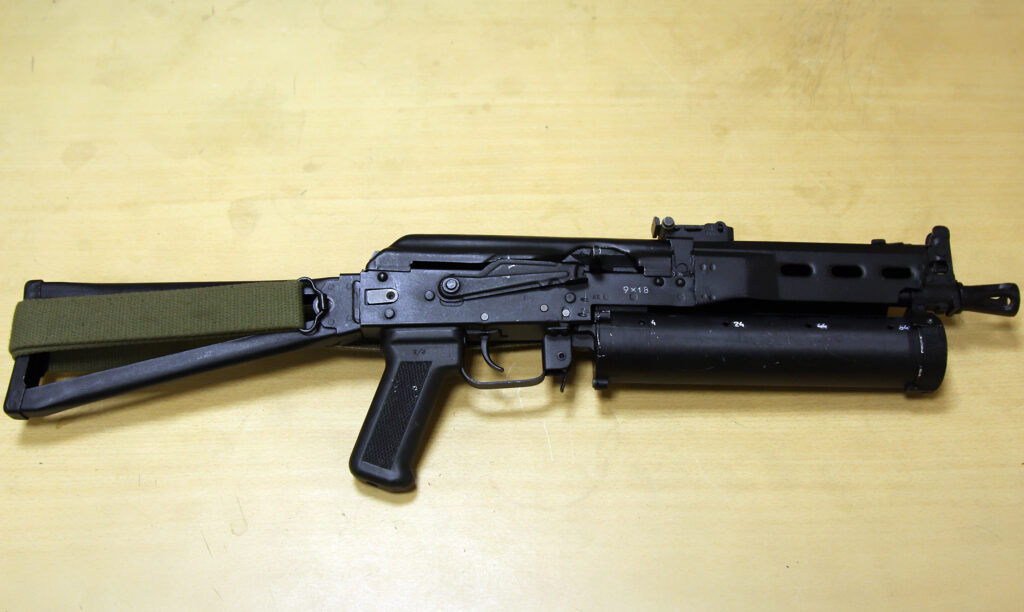
The PP-19 Bizon is a Russian sub-machine gun developed for use by police during a period of rampant terrorism. It’s helical magazine can hold up 60 rounds of 9mm bullets, and is also one of its more iconic features. In game it is the weapon used by the Igor robots. Instead of having a skeleton stock, I opted to incorporate an overfolding stock so that the collapsed profile would be smaller, especially with the big suppressor slapped onto the front of the gun. In-game the silencer works to reduce the effects of shooting the gun in closed in spaces, but it also just looks cool which is always most important.
The third and final gun I made is a personal favourite of mine, and that is the H&K USP! The USP is an extremely iconic gun, coming in many shapes and sizes. The USP is most famous for its Match variant with the silver slide and heavy front weight, appearing in media such as Tomb Raider and Half Life: 2 and its episodes. The design of the USP is extremely iconic, and of course its close cousin the Mark 23 appears as the most iconic weapon in the entire Metal Gear franchise, the SOCOM
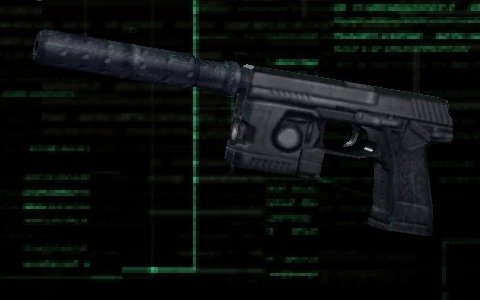
The USP is going to be the starter gun for the game, becoming obsolete as better guns are acquired by the player. But to try and combat this starter weapon trope, I thought of fully kitting out the USP so that it has more uses as the game progresses.
The idea is that these attachments would be acquired throughout the game through story events. The guns themselves are acquired that way, with the Desert Eagle being found on the dead body of the player’s expedition’s captain. The flashlight would be used immediately after being found in a dark section of the game, and the suppressor would be found late-game and would help to reduce the concussive effects of shooting, as well as not alerting enemies when fired.